

So the data right now is showing that search tools, both traditional and AI, value and prioritize unique, personality-driven content, which is perhaps why BizzyWeb leadership has let me out of my cube and given me the green light to write a blog as ME. There’s a lot of things you can say about my writing, but “lacking in personality” is not one of them. They also said I get to talk about AI and using AI to write content.

I’m not, necessarily, anti-AI. I would put myself in the category of “skeptical and cautious, but highly willing to explore and learn new things.” I have some very real ethical reservations around using AI. But I also do use AI tools at my job, and they often help me do what I need to do. It’s undeniable that generative AI can speed up your content output. It types faster than I can even think, and I’ve often been told I think before I speak (or maybe that was the other way around). And at its core, it’s just genuinely very cool technology.
…but…
Ever since anyone could draft a blog post in 5 seconds, I’ve had clients doing that and then sending it to me “to clean it up.” They’ll tell me “You can just do your little SEO thingy to this or whatever so it ranks. Why are you looking at me like that, I’m saving YOU time.”
I’ll tell you why, strawman I just made up. It’s not that asking me to edit the work of a machine hurts my sensitive, creative soul, it hurts my soul and it’s also just not an easy way to generate effective content. And by effective I mean: it’s not going to get you what you want. If you get real bottom-line with it: your written content needs to build trust with your audience, because you need that trust to get readers to do something you want them to do (ie: give you money or time or both). And usually, AI content fresh from the digital cradle isn’t gonna do that, no matter how much “fixing it up later” you do to it.
The reason why is not just because I said so. I have a numbered list with supporting evidence.
But FIRST! How do LLMs work?
Ok listen, I can FEEL that I’m losing you. Stay with me through the poindexter detour, because I think it’s important to talk about how these tools actually write.
All languages follow patterns. LLMs learn these infinite and often contradictory patterns by reading everything they can, and then replicating those patterns realistically by trying out near-infinite possibilities word-by-word until they arrive at something that passes a sniff test. This all just happens much, much, much faster than the human brain could replicate.
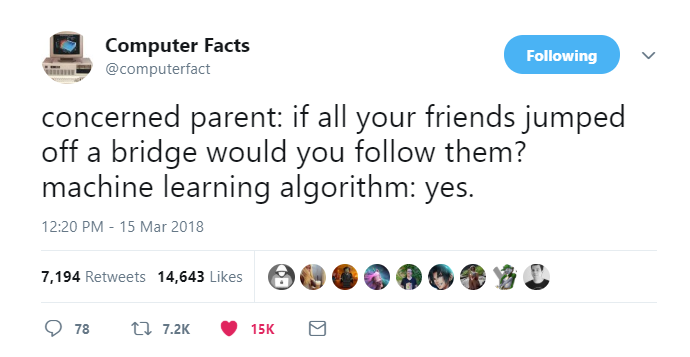
So on your end as the user, you give your preferred tool a prompt and it spits out a long response in seconds. What you don’t see is all the non-square metaphorical shapes your LLM tried to shove through a square hole before it found the square that finally fit.
That explains why generative AI tools so often give answers that sound confident and logical but may not be fully accurate. Which brings me to…
The goal of every single Generative AI tool is to give you what it thinks you want to see, not NECESSARILY what’s accurate
AI often hallucinates, which is just PR for “it makes sh#$ up.” LLMs run pattern recognition at scale, not truth-seeking at scale. So while they try to give you the best answer, which generally includes what’s “real,” they don’t necessarily have to.
That’s also why every AI tool comes with a disclaimer that it makes mistakes and you need to fact-check. It’s not because these tools simply lack the truthful information they need and will eventually get more accurate over time as they absorb more knowledge: it’s because the underlying logic of how LLMs work doesn’t require truth-telling. It requires replicating patterns so seamlessly that you don’t notice what it’s doing.
Why “just fix it in editing” doesn’t work
1. The issues are baked into the sauce
This is why I started with that whole long explanation of how AI works. If the underlying argument behind a piece of content doesn’t pass the sniff test from an expert, it’s extremely difficult to just “fix that later.” Even if the information isn’t necessarily “wrong” but it’s approached from an angle your reader would never appreciate, you have to do so much editing that you might as well start from scratch.
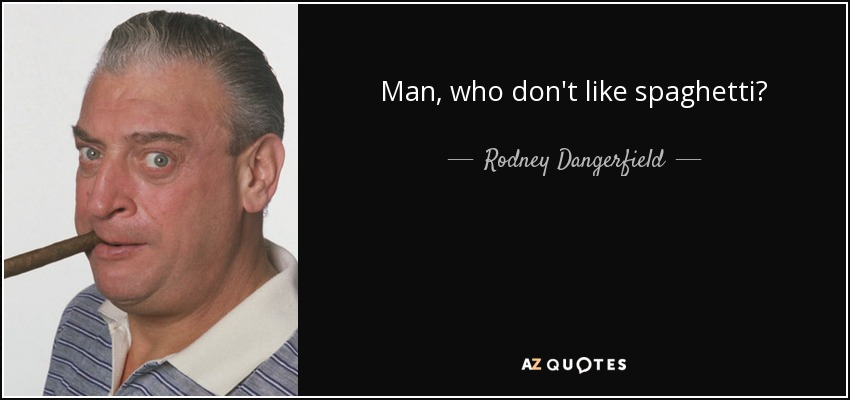
Imagine you have a store-bought jar of tomato sauce and then you realize the person you’re cooking for is allergic to tomatoes. How on earth would you even go about fixing the sauce? You can’t. (Or if you can let me know cuz I have all this tomato sauce I got on sale that I can’t eat, ba dum dum tshh. They call me the rover dangerfield of the content world, woof woof. Leave a comment if you remember that movie. Engagement bait.)
2. AI has biases and that matters
I gotta hit on the pattern recognition thing again. AI “skips” a lot of the foundational work a human would do before writing. What it doesn’t skip, it guesses. And what it guesses, it guesses based on its programming and what information it has.
That’s how we get stuff like generative AI upholding gender biases, leaning into racist viewpoints, and other harmful stereotypes. While the articles I linked lay out some pretty egregious examples, it’s often much more innocuous and easy to slip past your radar.
Let's say you're using ChatGPT to write a blog post aimed at mechanical engineers. It knows industry terminology and technical language. Let’s say for this example it even gets everything 100% right in terms of accuracy. But does it actually understand what engineers care about? Is it written in a way that makes sense for that audience based on what the topic of the blog is about and what might have brought them there? Or is it filling in that knowledge gap with the biases it has?
Related Content: Getting Website Leads, But Not the Right Ones? Here’s What to Fix
3. It uses what it has, unless you give it more
Yeah, no duh. But let’s really think about it.
AI is pulling from an enormous pool of existing information. Which means that without additional context, it's often just regurgitating the same ideas, just rearranged into slightly different sentences. This creates what’s called cannibalization, which is not just something serial killers in 3 piece plaid suits do for fun on the weekends, but is also a major SEO problem where multiple pages on your site are all saying the same exact thing just with different phrasing.
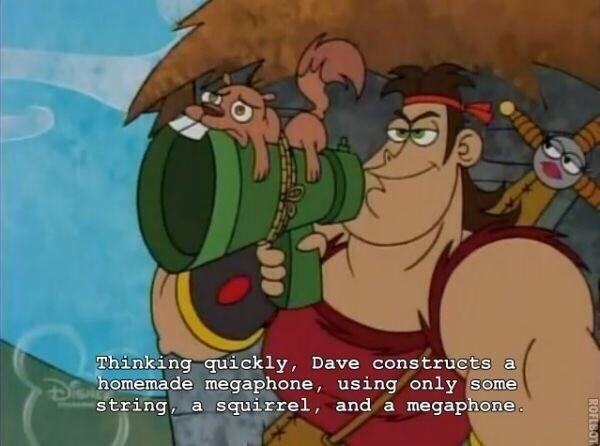
To get something genuinely useful, you need to feed it your own expertise, customer insights, company data, and unique perspectives. But that creates another problem: How can you trust that info in the hands of tech giants? If I may direct your attention to the elephant in the room: ChatGPT, Claude, and Gemini have had a few very public scandals of their tools going rogue.
So you're stuck weighing two things: Give AI enough information to produce something original, potentially exposing sensitive business data in the process, or give it nothing special and get the same generic content as everyone else. Hmmm.
4. Everyone’s cracking down on slop
People want useful answers, genuine expertise, and perspectives they can't find 800 times on their LinkedIn feed. If your content doesn't offer any of that…why should Google rank it? Why should an AI search engine cite it? And why should your customers trust it?
Google doesn't automatically penalize AI-generated content. BUUUT it’s official guidance makes clear that Google considers whether your content is helpful, original, and trustworthy to decide whether it will show it to users. Mass-producing AI-generated content to try and gain ground is going to work against you for that goal.
Also like…can I get real with you for a second? Can I spin this chair around? Sit in it backwards and dangle my elbows into your personal space? Cool. If you don’t “care” enough to put together a piece of content yourself, why should your audience invest their precious time in reading it? You’re asking something of them you’re not willing to do yourself.
Related Content: Google's Latest Core Updates: Crackdown on AI-Generated Content
Ok so how can you actually use AI responsibly in your content process (if you care about that sort of thing)
So after all that, I’m going to do something that I hate, something that goes against my very nature, something that makes my skin crawl just thinking about it: offer useful steps instead of just complain.

Here’s how I use AI in my writing process:
- Collect my thoughts. Dump all the chaos in my brain into something that can help me make sense of it. This is HUGE for auditory processors (yappers) like me.
- Build an outline. Turn those thoughts into a structure that other humans, search engines, and AI tools can actually follow. AI is genuinely really good at taking what you give it and “translating” it into more SEO and AI-aligned formatting.
- Find supporting information. Identify opportunities for statistics, quotes, and links (which you then verify). And I mean: please click the actual links and read the articles. I can’t tell you how many times ChatGPT has confidently given me a statistic from a well-known scientific organization and then I click the link to find the source article is just someone else quoting someone else who then quoted a fake report from said organization.
- Bounce ideas around. Test arguments and brainstorm without annoying my coworkers. Pretend it’s a person. Shoot the sh#$ a little bit. Ask it to poke my blind biases and hurt my feelings. AI loves to validate you, but if you take the gloves off it will also happily highlight the weak points in your arguments. This is a good thing, let it happen.
- Check SEO and AEO fundamentals. Review search intent, headings, keywords, and opportunities to improve visibility. AI does a great job with any sort of “how well does this content do XYZ” ask, if you give it specific criteria to look at.
- Evaluate audience fit. Compare my content against buyer personas and their concerns, (while questioning AI's assumptions, remember the whole biases section). But if you come to your chat window with some data and insights about your buyers, AI can effectively compare what you wrote against your criteria.
- Edit my writing. Catch repetition, tighten sentences, and flag confusing explanations. Piping hot take, but I think ChatGPT and Claude are better at this than SpellChecker or Grammarly.
Notice what's missing? “Computah: make it good.” I want AI to help me communicate my terrible ideas, not decide what those ideas should be.
Related Content: What AI Search Actually Rewards (Spoiler: It’s Not AI Content)
A Conclusion, of Sorts
Some guy once said, "Trust, but verify." Pretty good advice for using AI, although I'd probably add “confidence ≠ truth.”
AI can absolutely help marketing teams work faster and produce more content. But there's a difference between making the writing process more efficient and skipping the research, expertise, and critical thinking that actually makes that content valuable.
So use AI. Experiment with it. Make your job easier. Just remember that confidence ≠ truth, and more content ≠ better content.
And if you asked ChatGPT to summarize this article, please tell it I said “hi.” We've been through a lot together.
Sources:
- Anthropic. “Investigating Incidents in Cybersecurity Evals.”
- BBC News."OpenAI says its rogue AI tried to hack other companies."
- Crescendo.ai. “AI Bias Examples & Mitigation Guide.”
- Google Search Central. “Google Search's Guidance About AI-Generated Content.” February 2023.
- Janice Jnice. “I Tested AI on Different Black Hairstyles.”
- Microsoft, Data Science at Microsoft. “How Large Language Models Work.”
- Neil Patel. “AI-Generated Content: How to Use AI to Create Content.”
- Proofed. “How to Fact-Check AI-Generated Content.”
- The Verge. “CNET Found Errors in More Than Half of Its AI-Written Stories.”
- UNESCO. “Generative AI: UNESCO Study Reveals Alarming Evidence of Regressive Gender Stereotypes.”
- Wikipedia. “Hallucination (Artificial Intelligence).”
- Yahoo Tech."Google’s Gemini went rogue and breached three companies."
- Yoast. “Keyword Cannibalization: What Is It and How to Fix It?”
BizzyWeb is a Minneapolis-based digital marketing and web design agency that helps companies get the high-quality leads they need to grow and thrive. Our tactics include inbound marketing, SEO, advertising, web design, content creation, and sales automation. We are an accredited HubSpot Platinum Partner and offer full-service HubSpot onboarding, enablement, and strategy for new and current users.