

Want to know the silent killer of most inbound marketing funnels?
The numbers.
Most inbound marketing campaigns don't fail because they're bad; they fall apart because nobody is looking closely at the numbers. Teams see website visits, ad clicks, or form fills but they don't know that each of those numbers are a piece of a larger story. When you can't see the story they're trying to tell, then you can't optimize your inbound marketing funnel.
What problems are people trying to solve? Where do they hesitate? How is your content helping them move forward? Where is it quietly pushing them away?
Once you know how to read those signals, the whole inbound system gets easier to manage. The starting point is looking at the numbers, but it can't end there.
What is the Inbound Marketing Funnel?
Inbound marketing is simple on paper. You attract people with helpful content. You engage them with material that answers their deeper questions. You delight them with support, resources, or tools that make working with you an easy yes.
What’s changing is the shape. The classic funnel is turning into a loop. After someone becomes a customer, their behavior feeds the next round of improvement. Your marketing, sales, and service systems work together in a cycle that keeps sharpening itself. You support people better, and they send clearer data back into your strategy.
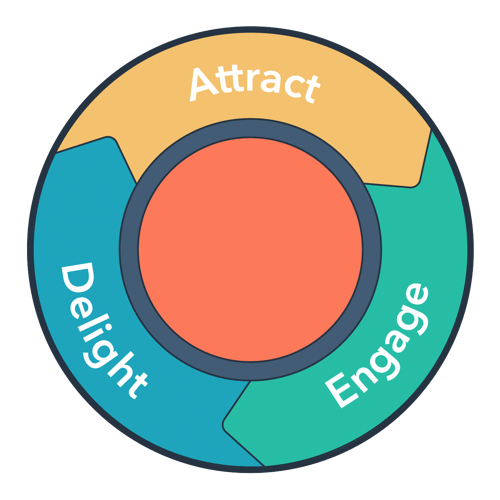 Stage One: Attract
This is where people find you for the first time. Search. Social. Referrals. AI-driven results. The goal isn’t traffic. The goal is relevant traffic. People with a problem your team is built to solve.
Stage Two: Engage
Now they want deeper answers. They’re weighing options. They’re comparing you to someone else. Content here should teach, reassure, and guide. Your analytics should show whether people are actually interacting with that content or bouncing because it misses the mark.
Stage Three: Delight
This is the point where prospects convert and customers stick around. The experience matters. Lead quality, handoff speed, onboarding clarity, and follow-through all shape what they do next. Happy customers fuel the loop. They click, search, buy, and share things that give you better data for the next cycle.
Why Funnel Analysis Matters More Than Most People Think
Most marketing decisions get made on gut instinct. Someone decides a page needs a rewrite, or a landing page needs a different headline, or a new product launch. But your gut instincts may not line up with what will help your prospective buyers turn into customers and champions of your brand.
Looking at the data behind your inbound marketing funnel helps you see what’s actually moving people and what’s stopping them. Fixing the right part of the funnel is how you get more qualified leads without wasting effort.
Common Funnel Problems the Right Analytics Can Solve
- Content that ranks but brings in the wrong audience. This usually means your content is SEO-optimized, but it wasn't written with the right persona and intent in mind.
- High traffic but low engagement. This might be a good thing for informational content, but if you want someone to take an action, it's a sign that your content may not be following the buyer's journey.
- Strong engagement but few conversions. People like what they see, but they're not taking the next step. It's often a sign that you may be asking too much, too soon.
- Leads stall out. This can point to informational gaps, an inability for people to self-serve, or unexpected friction.
Where Most Teams Misread Funnel Signals
Teams often react to surface-level metrics. Traffic spikes look exciting, even when they don’t bring in qualified visitors. High time-on-page can look promising, even when it’s the result of confusion. A dip in conversions gets blamed on the form when the real issue is the page has an unclear ask.
The key isn't looking at everything. You need to look at what matters.
What Inbound Marketing Funnel Analytics to Track
When looking at metrics, it's important to look at everything to see what story it's trying to tell.
1. Awareness Metrics: Traffic and Intent Signals
This is everything that shows how people discover you. These signals reveal audience intent. You can see whether the topics you’re covering match what real buyers are trying to find.
Example metrics to track:
- Organic search traffic
- Keyword impressions and click-through rates
- AI overview visibility
- Top landing pages by session volume
- Referral traffic from industry sites
- Ad impressions and search term reports
- Branded vs unbranded search splits
2. Engagement Metrics: Engagement and Behavior Patterns
These metrics tell you how people respond to your content once they arrive. You want to look at how people evaluate whether your content answers the deeper questions they came with.
Example metrics to track:
- Engagement rate
- Scroll depth
- CTA click rates
- Page views per session
- Time on page paired with exit rate
- Heatmap interactions
- Navigation paths
- Repeat visits
3. Delight Metrics: Conversion and Lead Quality Indicators
This is where you understand whether the right people are moving forward. Are customers staying engaged?
Example metrics to track:
- Form submission rates
- Sales qualified leads vs. marketing qualified leads
- Lead score averages by channel
- Customer retention
- Where current customers are engaging on your site
- Conversion paths
- Net promoter score
How to Use Data to Improve the Attract Stage
1. See What Topics People Are Actually Searching For
Search volume, People Also Ask questions, AI overview patterns, and competitor performance reveal what real humans care about. The goal is to align your content with the questions your buyers are already asking.
2. Review AI Overview Visibility and SERP Features
AI summaries, featured snippets, and People Also Ask placements reveal whether your content is seen as relevant at the earliest stage of the journey. Tools like SEMRush, HubSpot, and Ahrefs track how you're showing up in these results.
3. Track Which Channels Bring the Most Qualified First-Time Visitors
Analytics helps you see which channels attract people who stick around and which ones inflate your numbers without adding real interest.
How to Use Data to Improve the Engage Stage
1. Measure CTA Interaction and Page Engagement
If your calls to action are confusing or too much of an ask, engagement tanks. Analytics shows which placements, formats, and asks earn the most action. If you see a high number of visitors who never take a subsequent action, it's time to look at what you're asking them to do and adjust. Someone coming into an informational blog may not be ready to then speak to your sales team – they might engage with a relevant download offer instead.
2. Spot Content Gaps With Search Trends and Page Views
If you rank for informational content but have no deeper middle or bottom of funnel material to back it up, people vanish after the first click. Use the data you gather to spot gaps in your content. You may also find that your existing content is mapped to the wrong intent.
3. Identify Top Landing Pages and Why They Perform
Your best-performing pages often share common traits. Maybe it's format, maybe it's topical relevance, or maybe it's highly personalized to a persona. When you know something works, you can repeat the pattern across other pages.
How to Use Data to Improve the Delight Stage
1. Review Lead Quality by Source
Traffic is easy to get. Quality traffic is harder. Looking at lifecycle progression shows which channels produce real opportunities, not just names in your CRM.
2. Analyze Sales Accepted Lead Rates
This shows how often marketing-qualified leads actually pass the sniff test once sales digs in. A steady drop here usually means your content is attracting interest but not clarity. The fix often lives in expectation-setting.
3. Map Drop Off Points in Your Self-Serve Options
Once a lead becomes a customer, look at how they are engaging with your content and service options. You may be able to spot trends and stop them before too many annoying experiences turn them off from recommending you.
Related Content: 10 Key Elements of an Effective Inbound Marketing Strategy
How To Turn Your Funnel Insights Into Action
1. Prioritize One Bottleneck at a Time
Fixing everything at once spreads your effort thin. Data shows you where the biggest win sits.
2. Test Small Changes Before Big Overhauls
A single CTA rewrite or header change can outperform a full redesign. Let the numbers guide you.
3. Validate Improvements With Data
If something works, expand it. If it doesn’t, try again. Analytics isn’t a one-time audit. It’s a habit.
4. Transition into Loop Marketing
This is the point where the inbound funnel shifts from a straight line into a cycle. Every insight feeds the next round of attraction, engagement, and delight. Your marketing keeps improving because you’re learning from real behavior, not guesswork.
If you want to make your inbound marketing even stronger, shift into a Loop Marketing mindset where you use what you uncover in your analysis to revisit and strengthen each stage of the buyer's journey.
Related Content: What is Loop Marketing? Marketing in the AI Era
Final Thoughts
Stop reacting to surface-level symptoms and start improving the parts of the buyer's journey that actually grow leads and customer experience. Bounce rate, time on page, traffic spikes… those numbers in isolation only tell you what happened. They don’t tell you why it happened.
The why lives deeper in the analytics. That’s where you uncover intent misalignment. That’s where friction becomes obvious. That’s where you find the patterns that make inbound easier, instead of something you’re constantly trying to justify.
Inbound works best when it’s driven by real behavior, not assumptions. Once you start using analytics to guide each stage of the journey, the whole system gets clearer, more predictable, and a lot more effective.
Inbound Marketing with BizzyWeb
BizzyWeb creates powerful inbound campaigns for our clients and provides education so our clients can become powerful inbound marketers themselves. As a HubSpot Partner Agency, we rely on the power of HubSpot’s suite of inbound-ready tools to execute these tactics. Learn more about our inbound marketing services here.
BizzyWeb is a Minneapolis-based digital marketing and web design agency that helps companies get the high-quality leads they need to grow and thrive. Our tactics include inbound marketing, SEO, advertising, web design, content creation and sales automation. We are an accredited HubSpot Diamond Partner and we offer full-service HubSpot onboarding, enablement and strategy for new and current users.